
Why Small Businesses Struggle With Financial Management


Starting a small business feels exciting in the beginning.
You have an idea. You start getting customers. Money starts coming in. Things feel like they are finally working.
But then, slowly, something starts getting messy.
You’re working hard, but you’re not really sure where the money is going. Some months feel good, some feel tight. Taxes become stressful. And at some point, you realize — managing the business is one thing, but managing the money is a completely different challenge.
This is where most small business financial problems begin.
The truth is, many small business owners don’t fail because of bad products or lack of effort. They struggle because their financial side is not set up properly.
Let’s break down the real reasons why this happens.
It Usually Starts With “I’ll Manage It Myself.”

In the early days, most business owners try to handle everything on their own.
Sales, marketing, operations… and yes, finances too.
It makes sense. You want to save money. You feel like you can manage it.
So you track things in:
Excel sheets
Notes
Maybe some basic software
Or sometimes, just in your head
At first, it works.
But as the business grows, things stop being simple.
More transactions happen. More expenses come in. Clients take time to pay. Bills don’t wait.
And that’s when the cracks start to show.
No Proper System in Place

One of the biggest reasons behind small business financial problems is the lack of a proper system.
It’s not that business owners don’t care. It’s just that financial systems feel complicated and are easy to delay.
But without a system:
Numbers don’t stay accurate
Records get missed
Reports don’t make sense
You end up reacting instead of planning.
Think about it like this — if your business is growing but your system is still basic, you’re building on a weak foundation.
That’s where the poor bookkeeping impact starts showing up, even if you don’t notice it immediately.
Mixing Personal and Business Money

This is extremely common, especially in the early stage.
You use the same account for everything:
Paying for business tools
Buying groceries
Paying rent
Receiving client payments
It feels easy. No extra setup. No extra thinking.
But over time, it creates confusion.
When everything is mixed, you lose clarity.
You sit down to check your finances and start asking:
Was this expense for business or personal use?
How much did I actually earn?
Why do my numbers not match?
This is one of the most common financial mistakes startups make, and it causes problems later, especially during tax filing.
Bookkeeping Gets Delayed… Again and Again
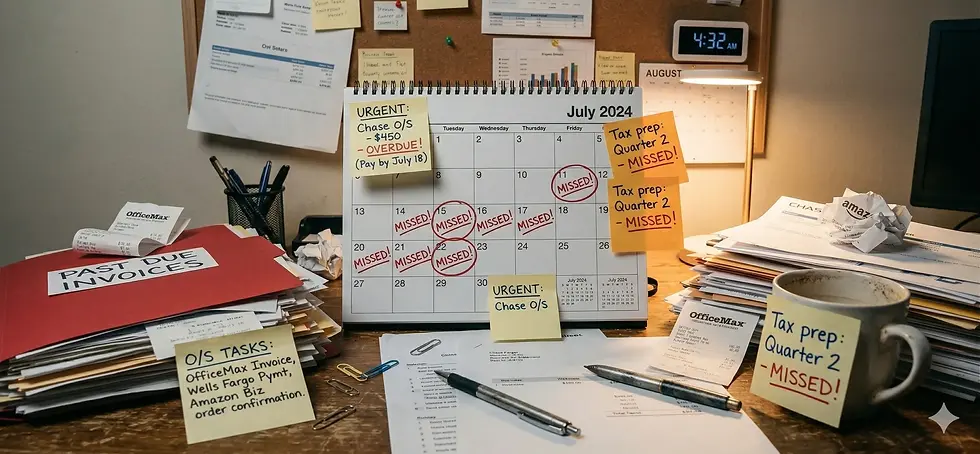
Let’s be honest — bookkeeping is not exciting.
So what happens?
You postpone it.
“I’ll update it later.” “I’ll do it this weekend.” “I’ll fix everything at the end of the month.”
But that “later” keeps moving.
Before you know it, weeks or even months have passed.
Now, when you finally sit down to update everything, you:
Forget small expenses
Miss entries
Feel overwhelmed
This is where the real impact of poor bookkeeping begins.
Instead of helping you, your records become unreliable.
You Don’t Really Know Your Numbers

This is a big one.
Many small business owners are working hard every day… but if you ask them simple questions like:
How much profit did you make last month?
What are your total expenses?
How much cash do you have right now?
They’re not fully sure.
And that’s not because they’re careless. It’s because they don’t have clear financial visibility.
Without visibility:
You can’t plan ahead
You can’t control spending
You can’t grow with confidence
You end up guessing instead of knowing.
Cash Flow Problems Start Showing Up

Now comes one of the most stressful parts — cash flow issues in a small business.
This is where things start feeling tight.
You may have sales. You may even be profitable on paper. But still, you struggle to manage day-to-day expenses.
Why does this happen?
Clients delay payments
Expenses keep coming
No proper tracking exists
Planning is missing
So even if money is coming in, it’s not coming at the right time.
And that creates pressure.
You start worrying about:
Paying bills
Managing salaries
Keeping the business running
This is where many businesses feel stuck.
Small Mistakes Turn Into Bigger Problems
Individually, these issues may not feel serious.
But together, they create a chain reaction.
You Start Making Decisions Without Data
Instead of using numbers, you rely on gut feeling.
Sometimes it works. Many times, it doesn’t.
Growth Becomes Slower
When your finances are not clear, you hesitate.
You don’t know:
If you can invest more
If you can hire
If you can expand
So you stay in the same place longer than you should.
Stress Keeps Increasing
This part is often ignored.
Financial confusion doesn’t just affect your business. It affects your peace of mind.
You keep thinking about money:
Late at night
During work
Even when you’re trying to relax
Tax Time Becomes a Nightmare
When records are not clean, tax filing becomes stressful.
You rush to fix things. You worry about mistakes. You fear penalties.
This is where many business owners realize they should have handled things differently.
So, What’s the Right Way to Handle This?
The solution is not complicated, but it does require consistency.
Start With Basics
Keep your finances separate
Track income and expenses regularly
Don’t delay bookkeeping
Even small improvements make a big difference.
Build a Simple System
You don’t need something complex.
You just need something:
Organized
Consistent
Easy to follow
Know Your Numbers
Make it a habit to check:
Revenue
Expenses
Profit
Once you start understanding your numbers, everything becomes clearer.
Where ToondayRonn Financial Service Comes In
Now, here’s the practical part.
Most business owners already have enough on their plates. Managing finances on top of everything else becomes overwhelming.
That’s where ToondayRonn Financial Service makes a real difference.
We focus on small businesses, so they understand exactly what’s going wrong and how to fix it.
What We Help With
Keeping your bookkeeping accurate and updated
Managing payroll on time
Preparing taxes properly
Giving you clear financial reports
Why This Matters
Instead of guessing your numbers, you start seeing them clearly.
Instead of feeling stressed, you feel in control.
Instead of reacting, you start planning.
And that’s a big shift.
Take the First Step Toward Better Financial Control
If you’re dealing with any of these small business financial problems, it doesn’t mean you’re doing something wrong.
It just means your system needs improvement.
And the sooner you fix it, the easier your business becomes to manage.
You can start small. Or you can get help from experts who already know what works.
ToondayRonn Financial Service helps you stay organized, compliant, and confident with your finances — so you can focus on growing your business without the constant stress.
FAQs
1. What are the biggest small business financial problems?
The biggest issues include a lack of systems, poor bookkeeping, mixing personal and business finances, and cash flow issues in small businesses.
2. How does poor bookkeeping impact a business?
It leads to wrong financial data, tax problems, stress, and poor decision-making.
3. Why do startups make financial mistakes?
Most startups focus on growth and ignore financial systems in the beginning, which leads to mistakes later.
4. What causes cash flow issues in small businesses?
Late payments, high expenses, and a lack of financial tracking are the main reasons.
5. How can I improve my business finances?
Start by organizing your records, tracking regularly, and getting professional help if needed.


Comments